Language Documentation and Description
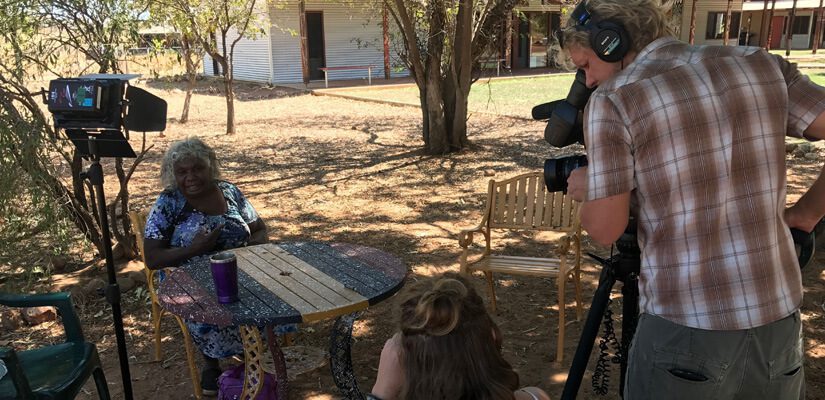
Language documentation is a fundamental part of our work here at MDWg. A language that has only become a written language in recent times requires a thorough description as a starting point. Data is initially collected by recording stories, teaching about country and nature, or other texts from senior community members. Sometimes, field trips to remote communities or places of cultural significance are organised in order to find the right information. Recordings made on these trips are then transcribed and translated. Linguists investigate these texts in order to understand the grammatical structures of the language.
A proper analysis of the grammar also requires a word-by-word translation and each single word is split up into further meaningful units. The development of a comprehensive descriptive grammar of Miriwoong is one of our goals but the grammar of Miriwoong is so complex that even after decades of research, linguists have not captured all relevant structures yet. Further research is crucial because describing the different parts of Miriwoong grammar is an important step in creating materials and resources for our language education program.
Community dictionaries for Miriwoong and Gajirrabeng languages have been developed recently and are currently being used and reviewed by the Miriwoong and Gajirrabeng communities. In 2017, we published the first edition of the Miriwoong Public Dictionary.
The next major step is the completion of a comprehensive dictionary of Miriwoong for the wider community. The completion of a descriptive grammar of Miriwoong is work in progress and likely to take several more years.